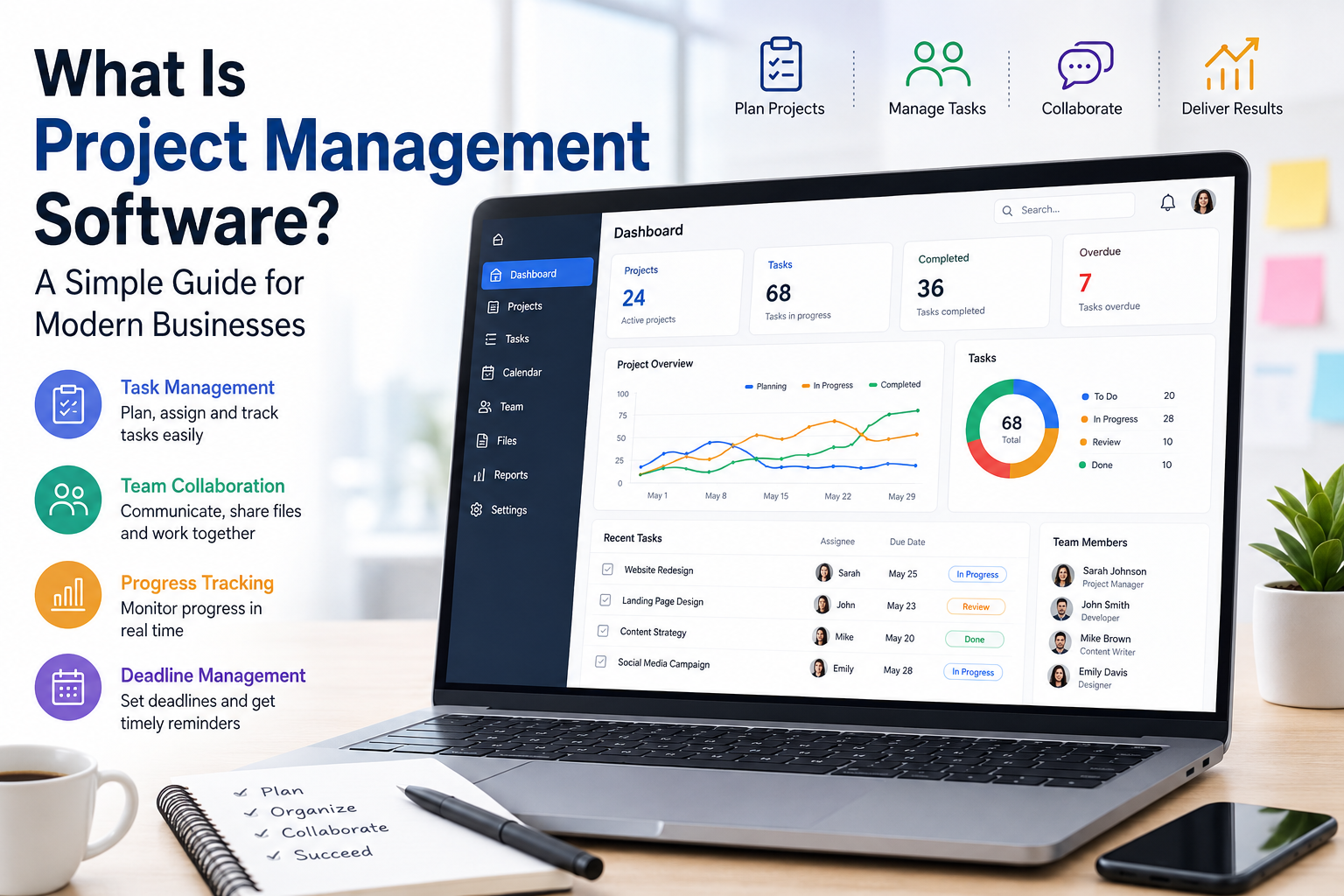
Running a business today involves handling multiple responsibilities at the same time. Teams manage deadlines, client communication, content creation, marketing campaigns, meetings, and daily operations simultaneously. As businesses grow, organizing all these tasks manually becomes difficult and stressful.
That’s why many companies now depend on project management software to stay organized and productive.
Project management software is a digital solution that helps businesses plan tasks, manage teams, track progress, and complete projects more efficiently. Instead of relying on scattered spreadsheets, endless email chains, or confusing group chats, everything can be managed from one centralized platform.
In simple terms, it helps businesses keep work structured and teams connected.
Understanding How Project Management Software Works
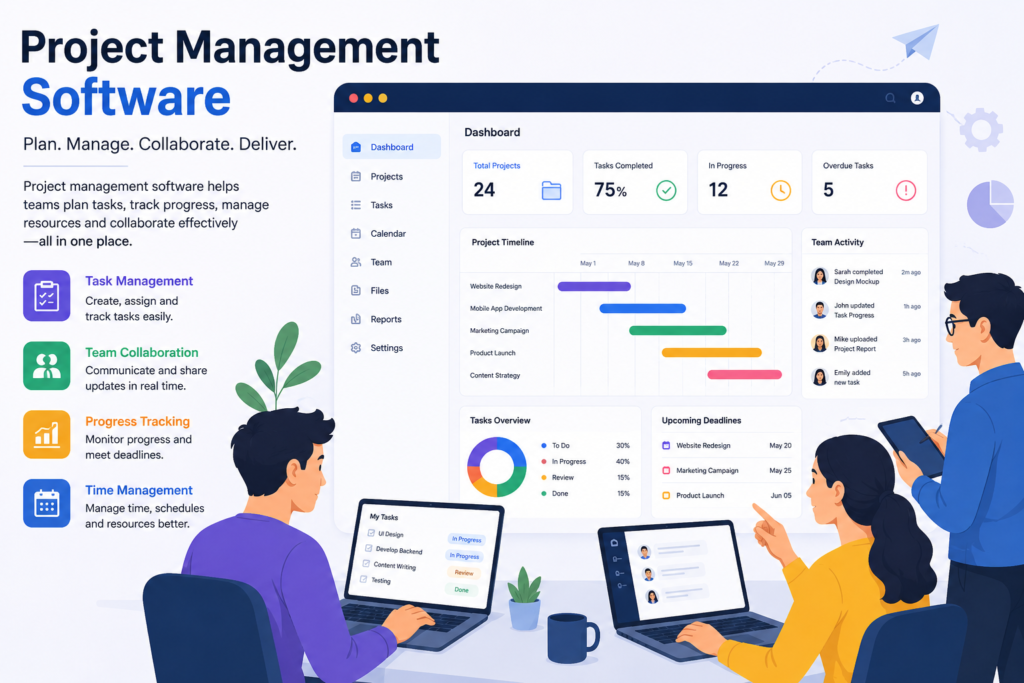
Project management software is designed to simplify the way teams handle projects. It allows users to create tasks, assign responsibilities, set deadlines, share files, and monitor work progress in real time.
For example, imagine a small digital marketing agency managing SEO campaigns, blog writing, social media content, and website development for several clients at once. Without proper organization, important updates can easily get lost.
A project management platform keeps every task visible and organized so teams know exactly what needs to be done and when.
This creates a smoother workflow and reduces confusion.
Why Project Management Software Is Important
Businesses today move much faster than they did a few years ago. Remote work, online collaboration, and increasing competition have made efficient communication more important than ever.
Project management software helps businesses stay ahead by improving teamwork and productivity.
Better Organization
One of the biggest advantages of project management tools is organization. Teams can break large projects into smaller tasks and track each stage clearly.
This prevents missed deadlines and helps employees focus on priorities.
Improved Team Communication
Instead of switching between different messaging apps and emails, team members can communicate directly inside the project dashboard.
Comments, updates, files, and feedback stay connected to the task itself, making collaboration easier.
Higher Productivity
When employees clearly understand their responsibilities and deadlines, work becomes more efficient.
Project management software removes unnecessary confusion and allows teams to spend more time completing meaningful work.
Easier Progress Tracking
Managers can monitor project status in real time. They can quickly identify delays, unfinished tasks, or workload issues before they become major problems.
This improves decision-making and project delivery.
Main Features of Project Management Software
Most project management platforms include a variety of useful tools designed to simplify work management.
Task Management
Users can create tasks, assign them to team members, set deadlines, and organize priorities.
Team Collaboration
Employees can leave comments, share updates, and communicate directly within projects.
File Sharing
Important documents, images, reports, and resources can be uploaded and stored in one place.
Calendar and Timeline Views
Visual schedules help teams understand deadlines and project timelines more clearly.
Automation Tools
Modern platforms often automate repetitive actions like reminders, status updates, or task assignments.
Reporting and Analytics
Some software provides performance reports that help businesses analyze productivity and project efficiency.
Who Uses Project Management Software?
Today, project management software is used by businesses of every size — from small startups to large companies. As work becomes more digital and team collaboration becomes more important, these tools help organizations stay organized and productive.
Different industries use project management software in different ways. Marketing agencies use it to manage client campaigns and content schedules, while software companies track development tasks and product updates. Ecommerce businesses often use these platforms to handle inventory projects, customer support workflows, and marketing activities.
Freelancers and remote teams also rely on project management tools to manage deadlines, communicate with clients, and organize daily work more efficiently.
Even educational organizations, event planners, and construction companies now use project management software to improve teamwork and simplify operations.
No matter the industry, the main goal remains the same — better organization, smoother communication, and more efficient project execution.
Popular Project Management Software Platforms
There are many project management software platforms available today, and each one offers different features based on business needs and team size. Some tools are designed for simple task management, while others provide advanced automation, reporting, and collaboration features.
Platforms like Trello are popular for their clean and beginner-friendly interface, making them a good choice for small teams and startups. Asana is widely used by businesses that need structured workflow management and better team coordination.
ClickUp has become popular because it combines task management, documents, time tracking, and productivity tools in one platform. Meanwhile, Monday.com focuses heavily on visual project tracking and team collaboration.
For businesses handling technical or software development projects, Jira is often preferred because of its advanced project tracking capabilities.
Many modern companies also use Notion for organizing tasks, notes, documents, and internal workflows in a flexible workspace.
The best project management software depends on factors like:
- team size
- project complexity
- budgetautomation needs
- collaboration requirements
Choosing the right platform can significantly improve productivity, communication, and overall project management efficiency.
How Project Management Software Supports Remote Work
Remote work has become a normal part of modern business, and project management software plays a huge role in keeping remote teams organized and connected. When employees work from different locations, managing tasks through emails or messages alone can quickly become confusing.
Project management software creates a centralized workspace where teams can collaborate in real time. Employees can view tasks, update progress, share files, communicate with teammates, and track deadlines from anywhere.
This improves transparency because everyone can clearly see:
- who is working on what
- project deadline
- stask priorities
- current project status
Many project management tools also include features like video integrations, notifications, shared calendars, and real-time updates, which help remote teams stay aligned throughout the workflow.
For businesses managing distributed teams, these platforms reduce communication gaps and improve accountability. Instead of constantly asking for updates, managers can monitor project progress directly through the dashboard.
As remote work continues growing worldwide, project management software has become one of the most important tools for maintaining productivity, teamwork, and efficient collaboration across different locations.
Common Mistakes Businesses Should Avoid
Although project management software can improve productivity and organization, many businesses fail to get the best results because of a few common mistakes.
One major problem is making workflows too complicated. Some companies add unnecessary processes, too many task categories, or excessive automation, which can confuse employees instead of helping them. A simple and clear system usually works much better.
Another common mistake is using multiple project management tools at the same time. Switching between different platforms can create communication gaps and make task tracking difficult. Businesses often perform better when teams work within one organized system.
Many companies also ignore proper employee training. Even the best project management software becomes ineffective if team members do not fully understand how to use it. Basic onboarding and guidance can greatly improve productivity and collaboration.
Some businesses also focus too much on software features while ignoring real teamwork and communication. Technology helps manage projects, but strong collaboration and clear responsibilities are still essential for success.
Avoiding these mistakes allows businesses to use project management software more effectively and create smoother, more productive workflows.
Is Project Management Software Worth Using?
For most businesses, project management software is absolutely worth using. As teams grow and workloads become more complex, staying organized without a proper system becomes difficult. These tools help businesses manage projects more efficiently while reducing confusion and missed deadlines.
One of the biggest benefits is improved productivity. Team members can clearly understand their responsibilities, track progress, and complete tasks on time without constant follow-ups. This creates a smoother workflow and saves valuable time.
Project management software also improves communication by keeping conversations, updates, and files in one centralized platform. Instead of searching through emails or multiple apps, teams can quickly access everything related to a project in one place.
For small businesses and startups, these tools can reduce operational stress and help teams stay focused on growth. Many platforms even offer affordable or free plans, making them accessible for businesses with limited budgets.
While project management software cannot solve every business problem, it provides structure, better collaboration, and improved workflow management. When used correctly, it can significantly increase efficiency and help businesses handle projects with greater confidence and organization.
Final Thoughts
In today’s fast-moving digital world, staying organized is one of the biggest challenges for businesses and teams. This is why project management software has become an essential tool for improving productivity, communication, and workflow management.
Whether it’s a small startup, freelance business, remote team, or growing company, the right project management platform can simplify daily operations and help teams work more efficiently. From task tracking to team collaboration, these tools make project handling more structured and less stressful.
However, success doesn’t depend only on software. Businesses also need clear communication, proper planning, and teamwork to get the best results. Project management tools work best when they support a strong and organized workflow.
As remote work and digital collaboration continue growing, project management software will remain a valuable solution for businesses looking to save time, improve efficiency, and manage projects more effectively in the future.