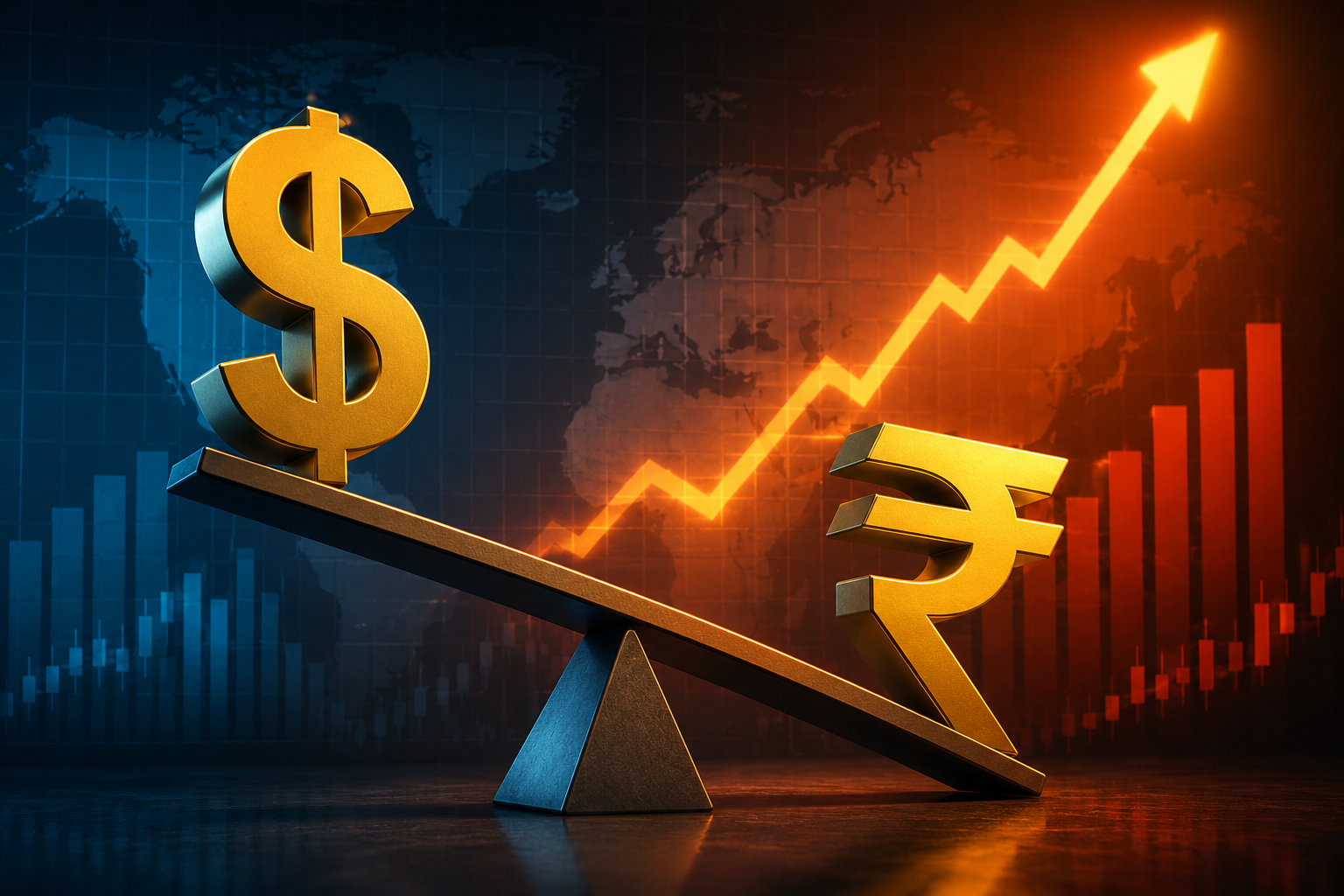
The dollar rate has once again become a major topic of discussion as the US dollar is trading around ₹95 against the Indian rupee. Over the past few months, people have noticed that the rupee is continuously weakening, making everything from fuel to foreign travel more expensive. Whenever the dollar becomes stronger, its impact is felt not only in financial markets but also in the daily lives of ordinary people.
Many people think the dollar rises only because of the American economy, but that is not completely true. The exchange rate changes because of multiple reasons such as global demand for dollars, rising oil imports, inflation, interest rates, and investor confidence. Even international events and economic uncertainty can push the dollar higher.
For a country like India, where imports like crude oil are heavily dependent on the US dollar, exchange rate movements are extremely important. A rising dollar can increase costs for businesses and consumers, while also creating opportunities for exporters and companies earning revenue in dollars.
In this article, we will understand in simple terms why the dollar rate is increasing, what weakens the rupee, and how these changes affect India’s economy and common people.
Main Reasons Why the Dollar Rate Is Increasing
The value of the US dollar does not increase because of a single reason. Several global and domestic factors work together to strengthen the dollar and weaken other currencies like the Indian rupee. Here are the major reasons behind the rising dollar rate.
1. Higher Interest Rates in the United States
One of the biggest reasons for a strong dollar is rising interest rates in the US. When the American central bank increases interest rates, global investors move their money into US markets to earn better returns. To invest there, they first need to buy dollars, which increases demand for the currency and pushes its value higher.
2. Strong Global Demand for the Dollar
The US dollar is the world’s most trusted and widely used currency. International trade, oil purchases, and global investments are mostly done in dollars. During times of economic uncertainty, investors and countries prefer holding dollars because they consider it safer than many other currencies.
3. Rising Crude Oil Prices
India imports a large portion of its crude oil, and these payments are made in US dollars. When oil prices increase globally, India needs more dollars to pay for imports. This raises demand for the dollar in India and puts pressure on the rupee.
4. Weakness in the Indian Rupee
Sometimes the dollar becomes stronger simply because the rupee becomes weaker. High inflation, trade deficits, slow economic growth, or foreign investors withdrawing money from Indian markets can reduce confidence in the rupee. As a result, more rupees are needed to buy one dollar.
5. Global Economic and Political Tensions
Wars, geopolitical conflicts, recessions, and financial crises often increase fear in global markets. During uncertain times, investors usually move their money into safer assets like the US dollar. This sudden increase in demand can make the dollar rise quickly against other currencies.
6. Foreign Investment Flow
When foreign investors pull money out of Indian stock markets and shift it to US assets, the demand for dollars rises sharply. This weakens the rupee further and increases the USD/INR exchange rate.
7. Inflation Differences Between Countries
If inflation in India rises faster than inflation in the US, the purchasing power of the rupee decreases more rapidly. Over time, this can weaken the rupee against the dollar and make imports more expensive
How a Rising Dollar Affects India
A stronger US dollar has a direct impact on India’s economy as well as the daily lives of ordinary people. Since many international transactions are done in dollars, even a small rise in the exchange rate can increase costs across different sectors.
Higher Fuel Prices
India imports most of its crude oil from other countries, and payments are made in dollars. When the dollar becomes expensive, oil imports cost more in rupees. This often leads to higher petrol and diesel prices in the country.
Imported Products Become Costlier
Many electronic gadgets, machinery, medicines, and luxury products are imported from abroad. A stronger dollar increases import costs, which means consumers may have to pay higher prices for these goods.
Foreign Education and Travel Get Expensive
Students studying abroad and people planning international trips are heavily affected by a rising dollar. Tuition fees, hotel bookings, flight tickets, and daily expenses become more expensive because more rupees are needed to buy dollars.
Pressure on Businesses
Companies that rely on imported raw materials or international payments may face higher operating costs. This can reduce profits and sometimes force businesses to increase product prices.
Impact on Inflation
When imports become expensive, the prices of goods and services inside the country may also rise. This contributes to inflation and affects household budgets.
Benefits for Exporters and IT Companies
A stronger dollar is not always bad for India. Exporters and Indian IT companies that earn revenue in dollars may benefit because they receive more rupees when converting their earnings back into Indian currency.
Advantage for NRIs
Non-Resident Indians sending money to India can also benefit from a stronger dollar. Their remittances convert into a higher amount in rupees, giving families in India more value.
What Does the Government Do to Stop the Rupee From Falling?
When the Indian rupee weakens too much against the US dollar, the government and the Reserve Bank of India (RBI) take several steps to control the situation. Their main goal is to reduce panic in the market, maintain economic stability, and prevent the rupee from falling rapidly.
RBI Sells US Dollars
One of the most common actions taken by the RBI is selling dollars from India’s foreign exchange reserves. When more dollars become available in the market, the pressure on the rupee reduces and the exchange rate can stabilize temporarily.
Increasing Interest Rates
The RBI may increase interest rates to make Indian investments more attractive for foreign investors. Higher interest rates can bring foreign money into Indian markets, which increases demand for the rupee and supports its value.
Controlling Inflation
High inflation weakens a currency over time. To protect the rupee, the government and RBI try to control rising prices through monetary policies, fuel tax adjustments, and economic measures that reduce inflation pressure.
Encouraging Foreign Investment
India often introduces policies to attract foreign companies and global investors. More foreign investment means more dollars enter the country, which can strengthen the rupee and improve overall market confidence.
Boosting Exports
The government also supports exporters through various schemes and trade policies. When Indian exports grow, more foreign currency flows into the country, helping balance demand for dollars.
Reducing Dependence on Imports
India imports large amounts of crude oil, electronics, and other goods. The government tries to reduce import dependence by promoting local manufacturing and encouraging domestic production through initiatives like “Make in India.”
Maintaining Market Confidence
Sometimes even investor sentiment affects the rupee. Strong economic growth, stable policies, and positive global confidence in India can help reduce pressure on the currency and prevent sharp declines.
Final Thoughts
The rise in the dollar rate is not caused by just one factor. It is the result of global economic conditions, rising demand for the US dollar, oil imports, inflation, interest rates, and the overall strength of the Indian economy. Since the dollar plays a major role in international trade and finance, even small changes in its value can impact countries like India in many ways.
A stronger dollar can make fuel, imports, foreign education, and travel more expensive for Indians. At the same time, exporters, IT companies, and NRIs may benefit from higher exchange rates. This is why movements in the dollar and rupee are closely watched by governments, businesses, and investors.
Understanding why the dollar rate increases helps people make better financial decisions and gives a clearer picture of how global events influence everyday life in India.